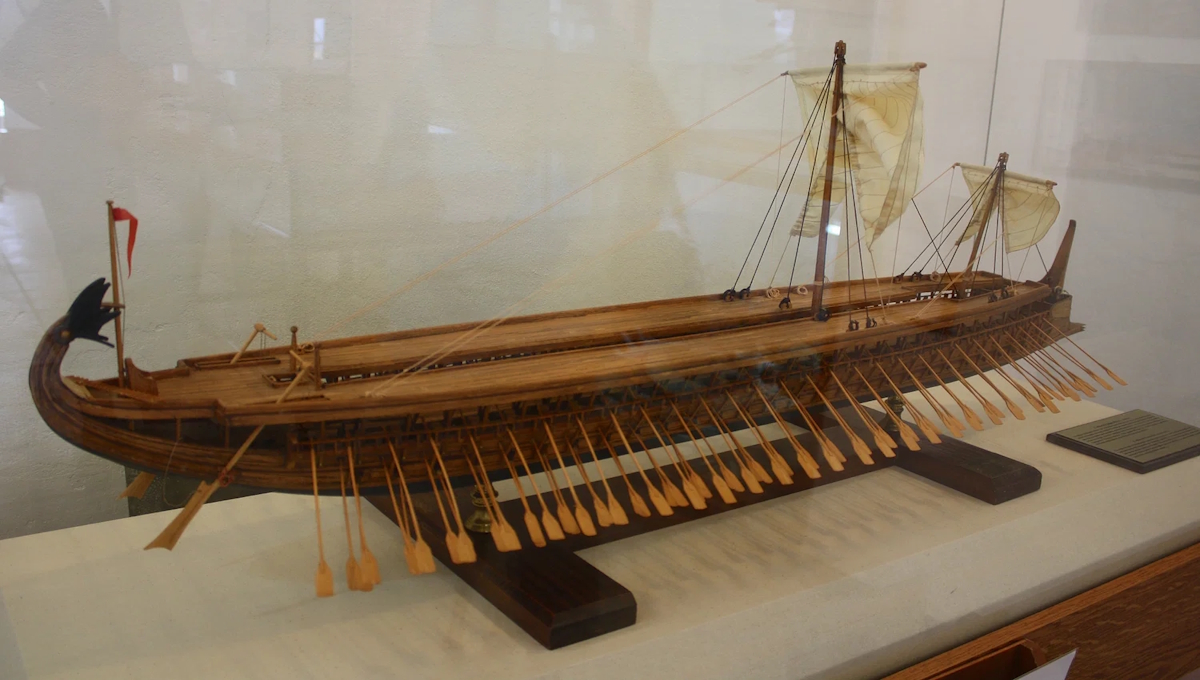
The Mediterranean was the stage on which the destiny of civilizations was played out. For the ancient Greeks, the sea was not just a conduit for trade or exploration—it was a battlefield where the fate of city-states, empires, and entire cultures was decided. Greek naval power was a product of centuries of innovation, blending technological ingenuity, disciplined manpower, and sophisticated tactics. The city-states that understood and controlled the sea, particularly Athens, achieved political, economic, and military dominance.
Greek warships evolved to meet increasingly complex tactical requirements. They ranged from small, agile vessels for raiding and scouting, to medium-sized ships optimized for speed and maneuverability, to massive heavy warships capable of carrying large contingents of soldiers. These designs reflected the Greek mastery of engineering, the demands of warfare, and the strategic need to dominate coastal and open-water theaters alike. Understanding this evolution requires examining the ships, their crews, their tactical uses, and the battles in which they participated.
1. Trireme: The Backbone of Greek Naval Dominance
The trireme was the most iconic Greek warship, forming the backbone of Athenian naval supremacy in the 5th century BCE. Its design represented a synthesis of speed, maneuverability, and combat effectiveness.
Design and Construction
The trireme had three rows of oars per side, manned by about 170 rowers divided into tiers:
-
Thranites (top row) – provided stability and high-speed strokes.
-
Zygites (middle row) – synchronized with the top and bottom for coordinated propulsion.
-
Thalamites (bottom row) – bore the most forceful rowing load.
The lightweight wooden hull was crafted from pine, fir, and occasionally oak, carefully balanced for speed without compromising structural integrity. The bronze ram (rostrum) was mounted at the bow, enabling ships to pierce enemy hulls in a maneuver known as perforation ramming.
The crew composition was sophisticated: rowers, helmsmen, marines, archers, and specialized officers managed navigation, coordination, and combat execution. Each man trained rigorously to synchronize strokes, essential for performing maneuvers like the diekplous.
Tactical Role
Triremes excelled in both offensive and defensive maneuvers:
-
Diekplous: Breaking through gaps in the enemy line to strike exposed sides or rear.
-
Periplous: Flanking the enemy to attack vulnerable vessels from multiple directions.
-
Ramming attacks: Directly targeting hulls with the reinforced bronze prow.
Battle Case Study: The Battle of Salamis (480 BCE)
The Persian fleet, vastly larger than the Greek contingent, faced a decisive disadvantage in the narrow straits of Salamis. The triremes’ speed allowed the Greeks to execute coordinated attacks, using the diekplous to isolate and ram Persian ships. Combined with superior knowledge of local geography, disciplined rowers, and tactical ingenuity, the Greek fleet achieved a stunning victory, halting Persian expansion and securing Greek independence.
2. Bireme: The Early Workhorse
The bireme was an earlier, simpler warship featuring two rows of oars per side. It required fewer rowers, making it easier and cheaper to build and operate.
Design Features
-
Two-tiered oar arrangement optimized for coastal patrols and reconnaissance.
-
Lightweight hull for speed in short-range missions.
-
Crew size: Approximately 100–120 men, including rowers and minimal marines.
Tactical Role
Biremes were versatile vessels, used for:
-
Scouting enemy positions and observing fleet movements.
-
Patrol duties to secure trade routes against piracy or hostile forces.
-
Troop and supply transport for small-scale amphibious operations.
Battle Case Study: The Battle of Lade (494 BCE)
During the Ionian Revolt, the Greek city-states assembled a fleet primarily of biremes. Although they were ultimately defeated due to disunity and strategic mismanagement, biremes demonstrated their usefulness in reconnaissance, coordination, and coastal defense.
3. Quadrireme: Hellenistic Engineering Innovation
The quadrireme, emerging during the Hellenistic period, reflected an evolution toward larger, multi-role vessels capable of both ramming and boarding.
Design Features
-
Four rowers per vertical section, increasing propulsion power.
-
Sturdy construction for mounting marines, archers, and light siege engines.
-
Crew composition: Rowers, marines, archers, engineers, and officers.
Tactical Role
Quadriremes combined speed, maneuverability, and combat power:
-
Could execute diekplous and periplous maneuvers effectively despite larger size.
-
Could carry more soldiers for boarding, bridging the tactical gap between triremes and quinqueremes.
-
Able to mount archery and light artillery, adding ranged offensive capability.
Battle Case Study: The Battle of Chios (201 BCE)
During the Second Macedonian War, Macedonian quadriremes faced the combined Rhodian and Pergamene fleets. Quadriremes transported marines for boarding attacks while also engaging in ramming maneuvers. Though Macedonia lost, quadriremes showcased their ability to combine multiple tactical roles in a single platform.
4. Quinquereme: The Heavy Hitter
The quinquereme became a dominant warship during the late Hellenistic period, later adopted and expanded by the Romans.
Design Features
-
Five rowers per vertical section to generate powerful propulsion.
-
Large, stable platform capable of sustaining boarding operations and ranged attacks.
-
Reinforced bronze ram for devastating collisions.
-
Crew size: Often more than 300 men, including rowers, marines, archers, and officers.
Tactical Role
Quinqueremes were used in large fleet battles:
-
Capable of sustained ramming against heavy ships.
-
Transported large contingents for boarding enemy vessels en masse.
-
Supported missile troops and archers for ranged combat prior to boarding.
Battle Case Study: The Battle of Ecnomus (256 BCE)
One of the largest naval battles of antiquity, Rome’s quinqueremes clashed with Carthaginian fleets. The ships’ heavy rams and large marine contingents allowed combined ramming and boarding attacks. Roman adaptations of Greek designs demonstrated the quinquereme’s enduring influence on Mediterranean naval warfare.
5. Tessarakonteres: Monumental Display
The Tessarakonteres, commissioned by Ptolemy IV Philopator, represented the apex of ceremonial naval engineering, exceeding 120 meters in length with multiple decks and thousands of rowers.
Purpose and Design
-
Primarily ceremonial, showcasing wealth, power, and technical mastery.
-
Ornate decorations on multiple decks reflected royal prestige.
-
Operational use in warfare was limited due to size and maneuverability constraints.
Historical Context
The Tessarakonteres symbolized Ptolemaic dominance and technological ambition. While it saw little combat, its construction highlighted the political and cultural role of naval architecture in Hellenistic dynasties.
6. Hemiolia: The Swift Raider
The hemiolia was a small, fast, and agile ship, used primarily for raiding, scouting, and asymmetric warfare.
Design Features
-
Mixed oar arrangement for rapid maneuvering.
-
Minimal crew requirements, emphasizing speed over manpower.
-
High velocity allowed surprise attacks and evasive maneuvers.
Tactical Role
Hemiolias disrupted supply lines, intercepted merchant ships, and conducted reconnaissance. They demonstrated that smaller vessels could influence strategic naval operations, forcing major fleets to adapt.
Battle Case Study: Aegean Pirate Raids (4th Century BCE)
Hemiolias were frequently employed in raids against Aegean trade routes. Their speed allowed them to strike quickly and retreat before larger warships could respond, forcing fleets to devote resources to patrols and convoys rather than offensive operations.
Crew Life and Training
Greek naval power depended on rigorous crew training and discipline. Rowers trained daily to maintain synchronization, endurance, and efficiency. Marines practiced boarding, spear fighting, and archery under realistic conditions. Crew coordination was vital: a misaligned stroke could break formation, leaving ships vulnerable. Discipline, stamina, and tactical knowledge were as crucial as the ships themselves.
Tactical Innovations
Greek fleets developed advanced naval tactics, exploiting both engineering and human skill:
-
Diekplous: Piercing through enemy lines to attack vulnerable sides.
-
Periplous: Flanking enemy ships for coordinated attacks.
-
Ramming: Using bronze prows to disable opponents before boarding.
-
Combined arms: Synchronizing rowers, marines, and missile troops in complex maneuvers.
These strategies allowed Greek navies, particularly Athens, to dominate the Mediterranean despite numerical disadvantages.
Visual Comparison Chart — Ancient Greek Warships
| Ship Type | Approx. Length | Rowers / Crew | Primary Role |
|---|---|---|---|
| Penteconter | ~28–33 m | ~50 oars (25 per side) | Early war/raider; scout & general purpose |
| Triaconter | ~18–25 m | ~30 oars (15 per side) | Light warship / reconnaissance |
| Bireme | ~24 m | ~120 rowers | Early naval combat & patrol |
| Trireme | ~35–40 m | ~170 rowers | Battles; ramming & fleet engagements |
| Trihemiolia | ~30 m | ~120 oars (semi‑trireme) | Faster trireme variant |
| Quadrireme | ~40–45 m | Greater power via 4 rowers/section | Multi‑role heavy galley |
| Quinquereme | ~45–50 m | 5 rowers/section | Heavy combat & boarding |
| Polyremes (e.g., Hexaremes) | 50 m+ | Many rowers (>5 per section) | Flagships / large fleet command |
| Tessarakonteres | ~120+ m | Thousands of rowers | Prestige / ceremonial |
| Hemiolia | ~15–20 m | ~30 rowers | Light raids, patrols & dispatch |