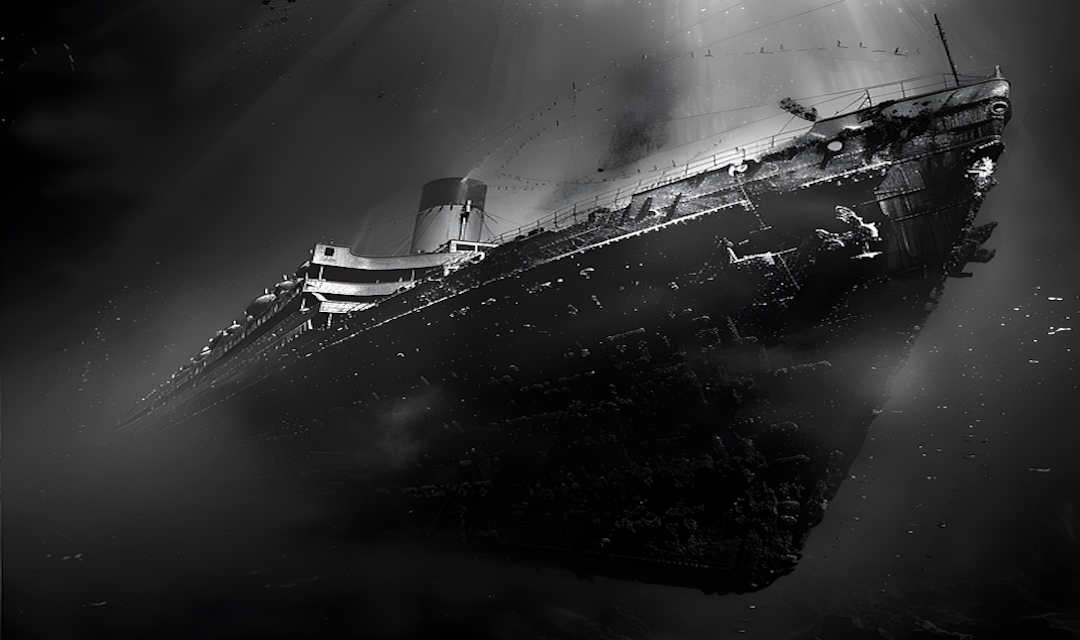
The sinking of the RMS Titanic in April 1912 left an indelible mark on the world. Beyond the immense loss of life, it sparked a wave of fascination, speculation, and even audacious ideas about salvaging the sunken ship. Among these proposals, perhaps the most bizarre and ambitious came in 1914, in the form of what became known as the “Titanic Magnet Idea”.
The idea was proposed by Charles Ashley Smith, an American architect with an extraordinary imagination. His concept involved raising the Titanic from the depths of the North Atlantic using powerful electromagnets, decades before underwater robotics or remotely operated vehicles were even possible. At the time, the Titanic rested nearly 2.5 miles beneath the ocean surface, far beyond the reach of any conventional salvage technology.
Smith’s plan was as creative as it was implausible. It involved sending a submarine to descend to the wreck, carrying large electromagnets designed to attach to the ship’s steel hull. Once attached, surface ships would lower additional magnets and cables to the site. The magnets would create a secure grip on the wreck, allowing the ship to be gradually lifted toward the surface using steam-powered winches. In some variations of the plan, buoyant devices like balloons or pontoons were proposed to assist with the lift.
The press of the day treated Smith’s idea with both amusement and fascination. Newspapers described it as a potential triumph of human ingenuity: a chance to recover the Titanic, bodies, and treasure. However, engineers and skeptics immediately noted the immense obstacles. The water pressure at that depth was extreme, the required magnet strength was far beyond contemporary technology, and lifting hundreds of thousands of tons of wreckage with cables and winches was effectively impossible.
Despite its impracticality, the Titanic Magnet Idea captured the public imagination. The image of a daring submarine descending into the dark, icy depths, clamping magnets onto the sunken luxury liner, and inching it upward like a gigantic steel leviathan was irresistible. Some even imagined that once lifted, the Titanic could be refitted and returned to service, a fantasy that seems almost absurd today.
The Titanic Magnet Idea was part of a broader trend of early 20th-century proposals to salvage the wreck. Other ideas included filling the ship with compressed air or wax to make it buoyant, or using giant pontoons to float it to the surface. These plans often bordered on the fantastical, reflecting both the technical optimism of the era and society’s obsession with the Titanic itself.
In hindsight, Smith’s magnet scheme seems more like science fiction than engineering. Modern technology has allowed deep-sea exploration, and the Titanic was eventually discovered in 1985 by Robert Ballard and his team using submersibles and sonar mapping—but lifting the ship intact remains unfeasible. The magnet idea would have failed even with today’s equipment, illustrating the audacity and imagination of early salvage enthusiasts.
Interestingly, the proposal also highlights human psychology. The Titanic, as a symbol of modern luxury and technological hubris, inspired grandiose, imaginative, and sometimes impossible solutions. Charles Ashley Smith’s electromagnet plan is remembered not for its feasibility, but for the boldness of its vision and the sense of wonder it provoked.
Today, the Titanic Magnet Idea stands as a curious footnote in maritime history: a reminder of the lengths to which people will go to reclaim what is lost, and a testament to the human desire to conquer the impossible. Though the magnets never descended and the wreck remained undisturbed for decades, Smith’s plan continues to fascinate historians and enthusiasts as a vivid example of early 20th-century ingenuity and ambition.